
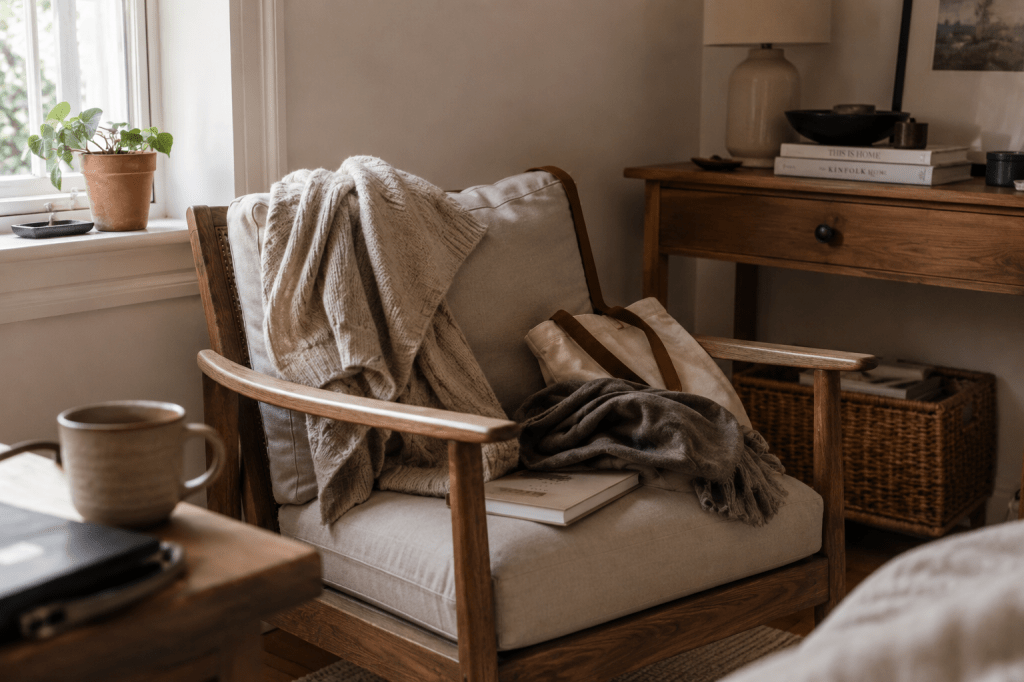
After the bigger sweep of spring cleaning, I often find it’s not the obvious clutter that lingers.
It’s the quieter spaces.
The everyday places we move through without thinking too much about them — the surfaces that catch the natural rhythm of daily life. The spots where keys get dropped, papers land, sweaters get draped, and dishes sit for a little longer than planned.
They rarely feel dramatic enough to demand attention. They’re not necessarily messy. But because we interact with them every day, they can quietly create more friction than we realize.
A front entry that feels crowded when you walk in the door.
A kitchen table that slowly becomes a temporary holding place for mail, bags, receipts, and the things you mean to deal with later.
A coffee table that gathers the small pieces of everyday life.
A chair that becomes the in-between spot for jackets, laundry, or clothes that aren’t quite ready to go back but aren’t dirty enough for the hamper.
These are often the spaces that quietly shape how a home feels.
When they become overloaded, even a small amount of visual clutter can start to feel heavier than it is. It can create that subtle sense of interruption — the feeling that something is always waiting to be put away, sorted, or dealt with.
What I’ve learned is that these spaces usually don’t need a big organizing project.
They often just need a small edit.
A moment to notice what naturally lands there and a simple system that supports that pattern instead of fighting it.
That might look like a tray by the front door for keys and sunglasses. A basket for papers that need attention. A place for the few things that always seem to collect on the coffee table. A designated spot for the clothes that tend to land on the chair.
Not because the goal is perfection.
And not because every surface needs to be clear all the time.
But because when a space reflects how you actually live, it becomes easier to use, easier to reset, and easier to maintain.
I think that’s often where organizing becomes most helpful — not in creating a home that looks perfectly styled, but in reducing the little points of friction that quietly show up in everyday routines.
Sometimes the spaces that create the most daily friction are also the easiest to edit.



Leave a Reply